Chand Baori stepwell, Rajasthan
At one end, over 60 steep steps lead down to the water.
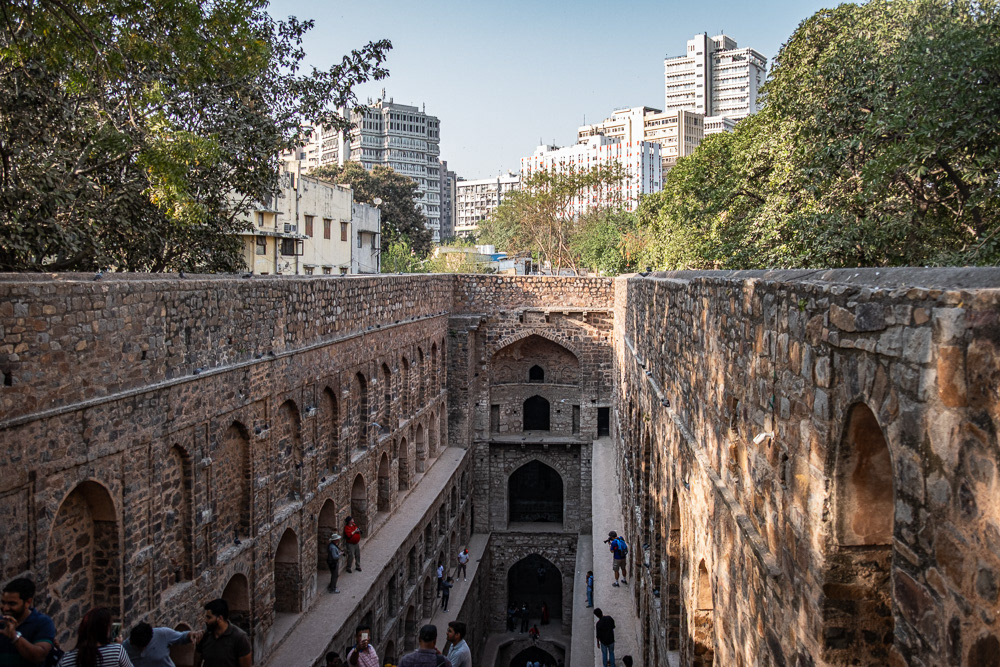
The other three sides are enclosed by high walls with arches and niches built into the walls, connected by a walkway.
Steep steps!
No railings!
Back of the stepwell
Stairs at the back
A long covered walkway at the top of the stepwell.
Under one of the covered walkways
The city has built around this stepwell.
It is 60 x 14 meters (196 x 49 feet) and has 3 levels. There are 108 steps.
It's a popular site for tourists and for locals. It's been the setting for many movies.
This is now a protected monument.
These days, the well is almost dry.
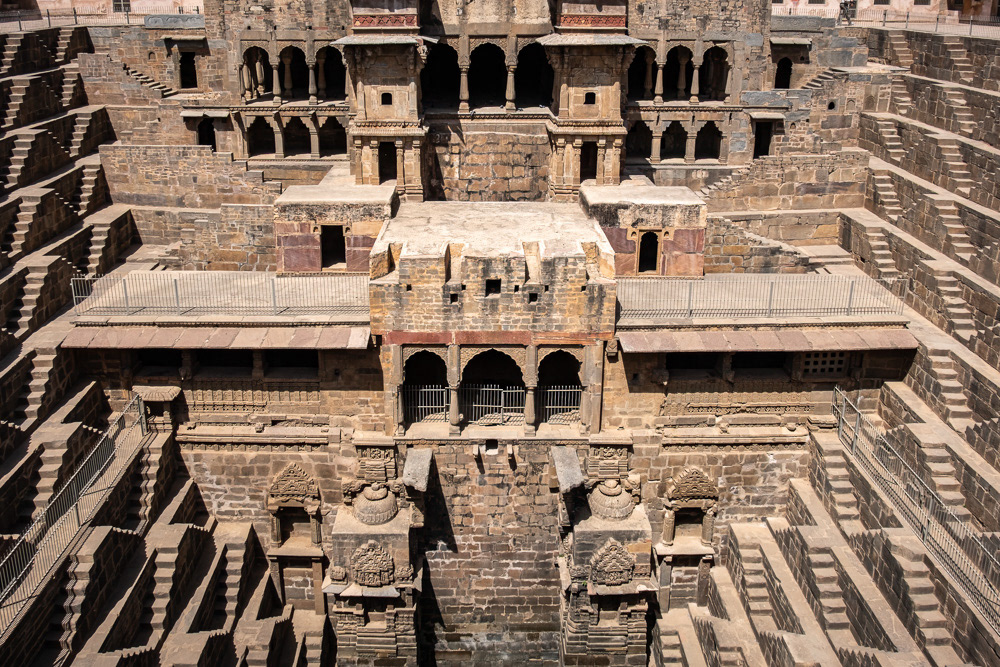
Chand Baori is one of the oldest surviving step wells in the country, built in the 8th or 9th century. It is the deepest stepwell in the world - about 30 meters (100 ft) deep to the water level.
On three sides, it has 3500 steps cascading 13 stories down into a massive tank at the bottom.
The perfectly symmetrical steps are in a zigzag formation that creates a mesmerizing geometric illusion.
The fourth side has the Haveli Pavilion - an ornate, three-story stage and viewing gallery. Historically, it was reserved for the royal family to rest, hold court, and oversee ceremonial activities. The Pavilion features intricately carved balconies, pillared galleries, and, at one time, beautiful sculptures.
The stepwell provides natural air conditioning. Due to the depth and design of the stepwell, the air at the bottom remains 5°C to 6°C (9 to 11 degrees F) cooler than at the surface, making the pavilion area a welcome relief from the scorching Rajasthani heat.
The city has built up around this stepwell, too.
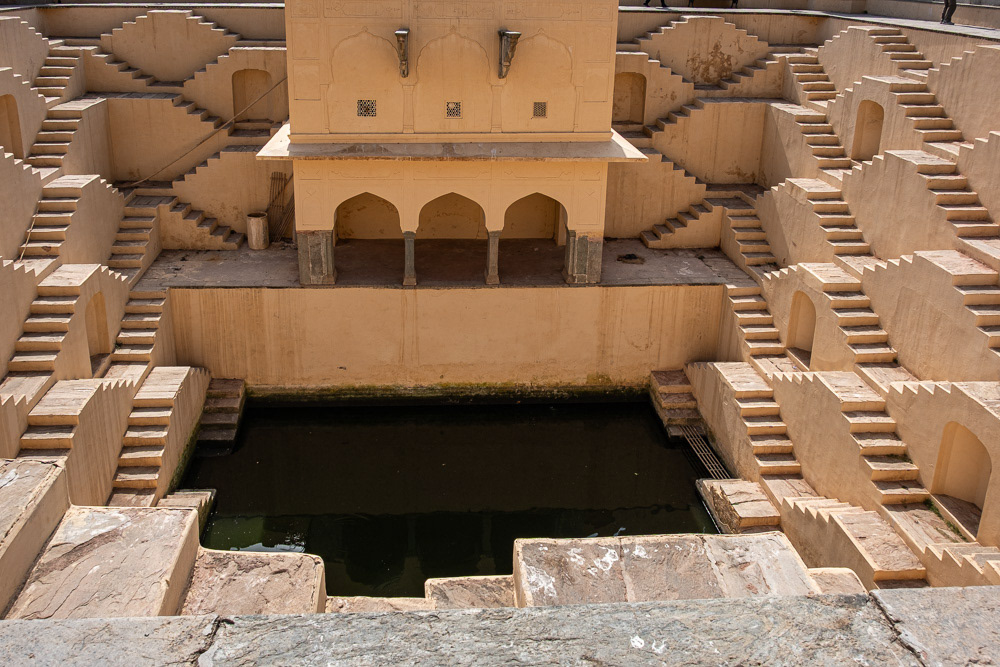
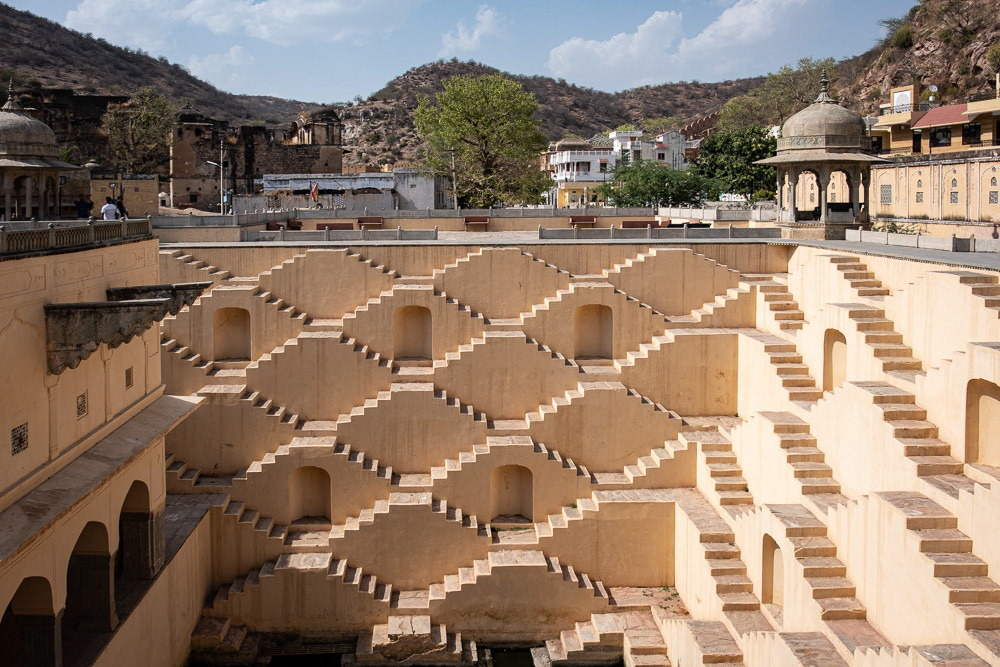
Panna Meena ka Kund is an eight-story stepwell that is 200 feet deep.
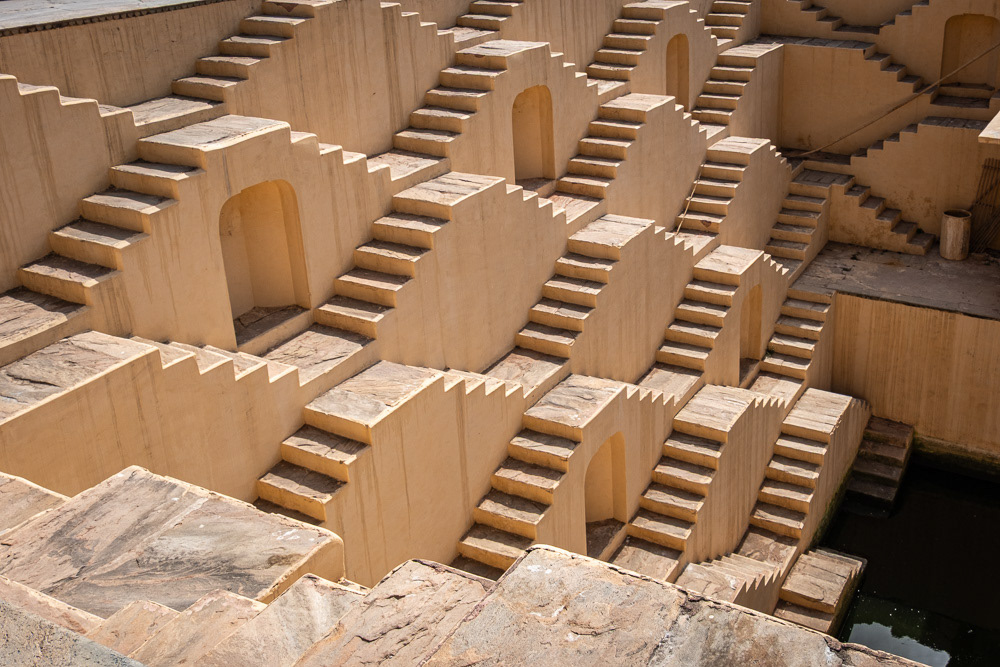
There are 1800 symmetrical steps.
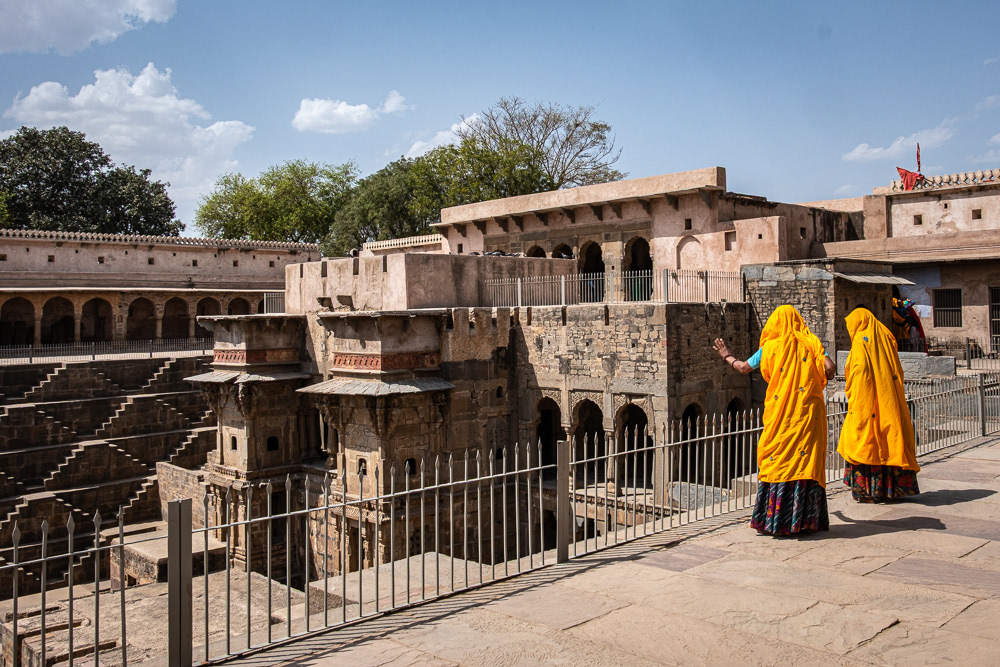
A view of the top level of the stepwell.
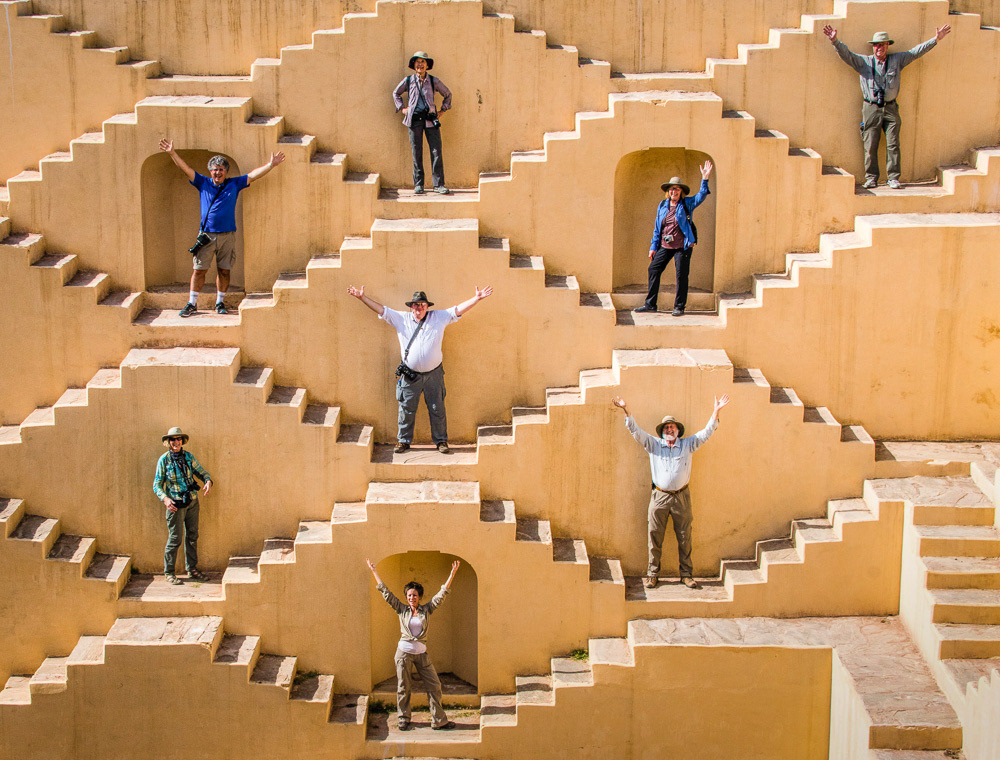
Eight of us went to India in March 2018, and we visited these four stepwells.