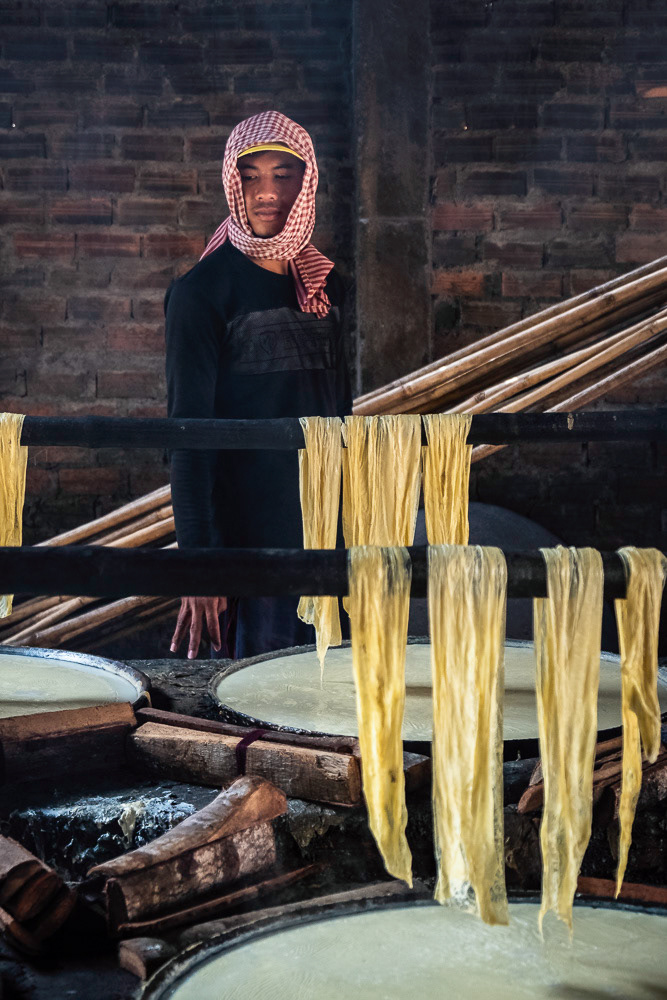
My trip to Cambodia included a morning on Silk Island (Koh Dach), just east of Phnom Penh, across the Tonlé Sap River. One of our stops was to see how beancurd skin is made the traditional way - boiling vats of fresh soybean milk and skimming off the skin that forms on the top.
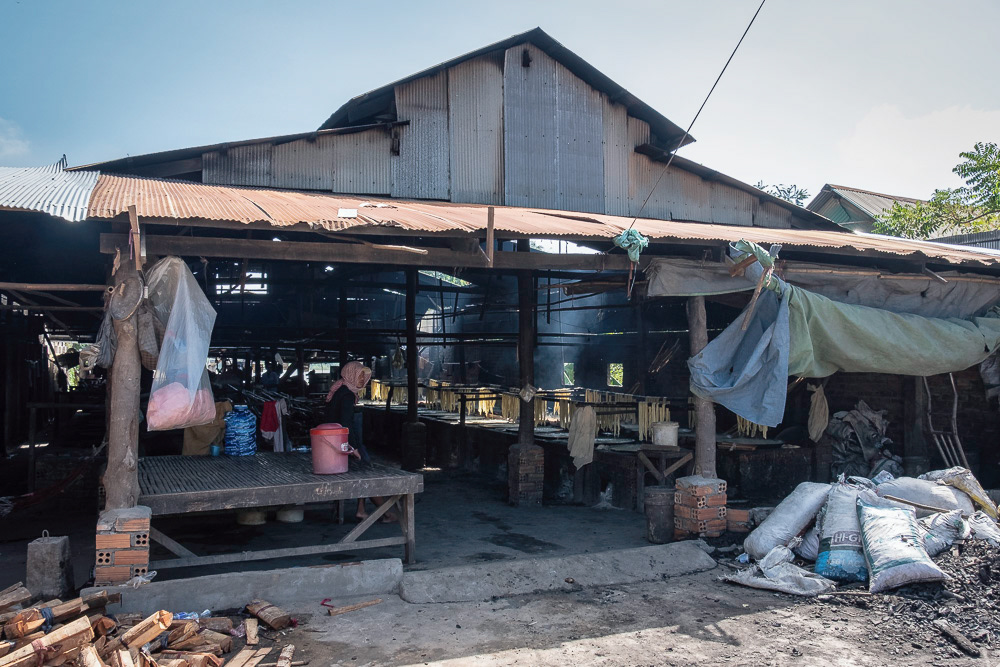
This large, open building is where the beancurd skin is made.
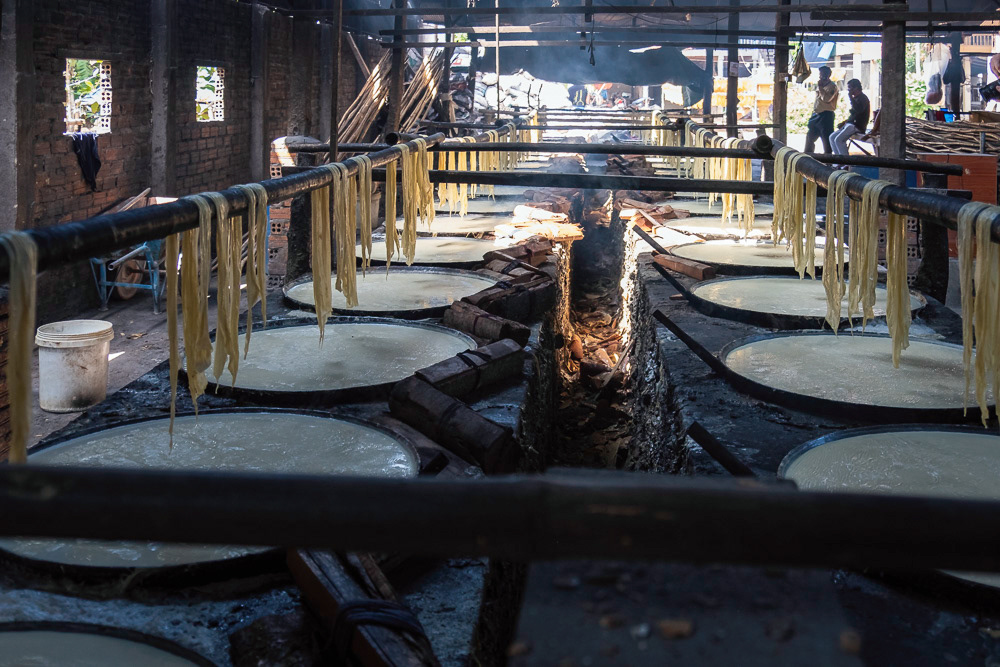
There are two rows of vats of hot or boiling soybean milk, with about 16 vats in each row.
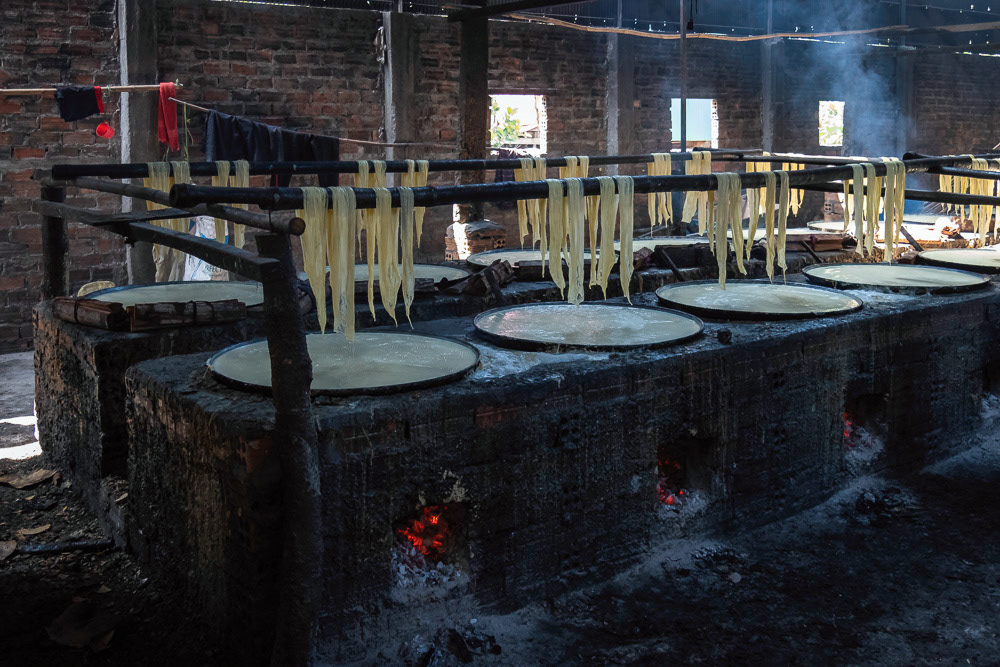
Each vat is separately heated by a wood fire.
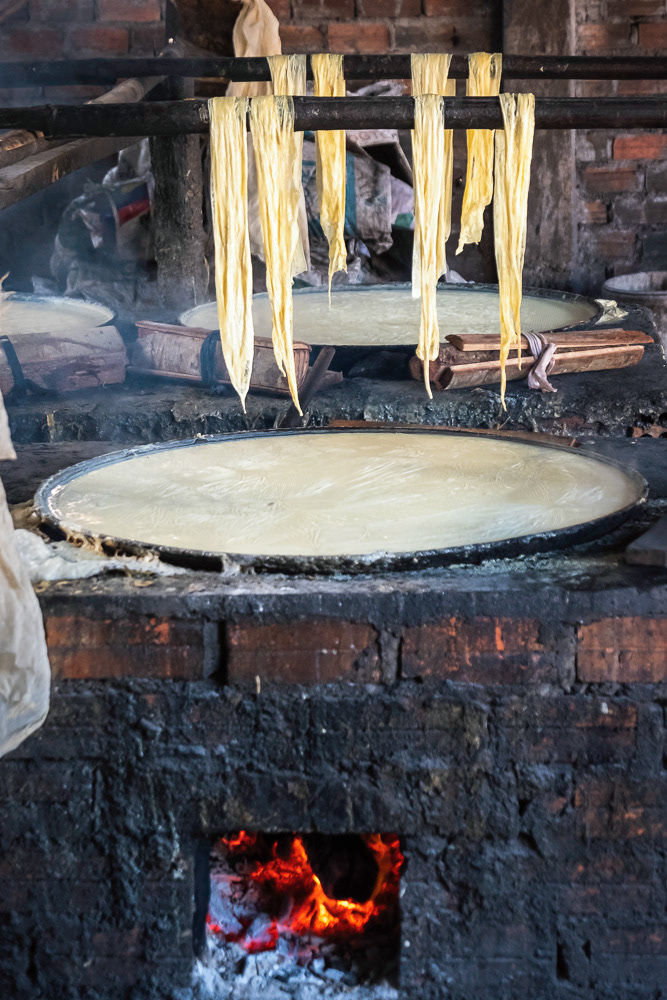
Close-up of one of the vats with its burning fire
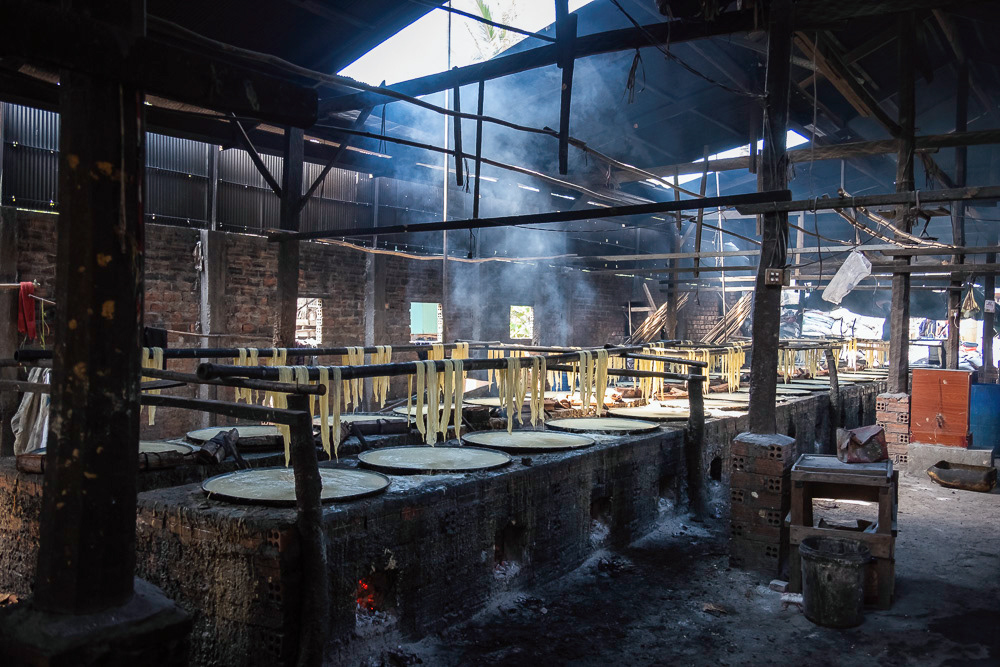
The vats release a lot of steam, and the facility was very hot inside even with the large holes in the roof, open windows on two walls, and two open sides.
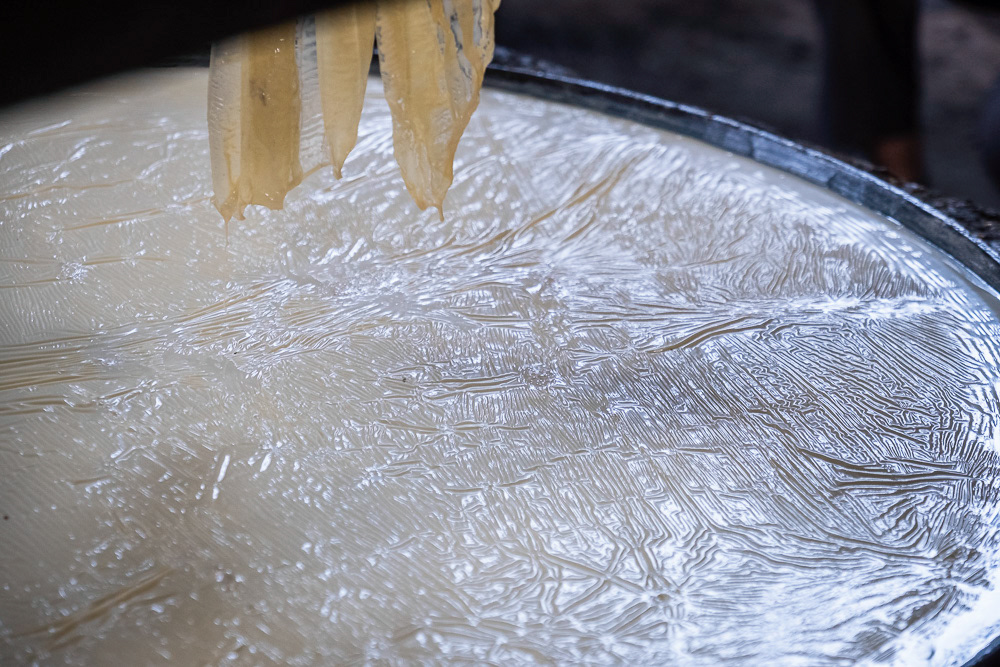
A skin forms on top of each vat.
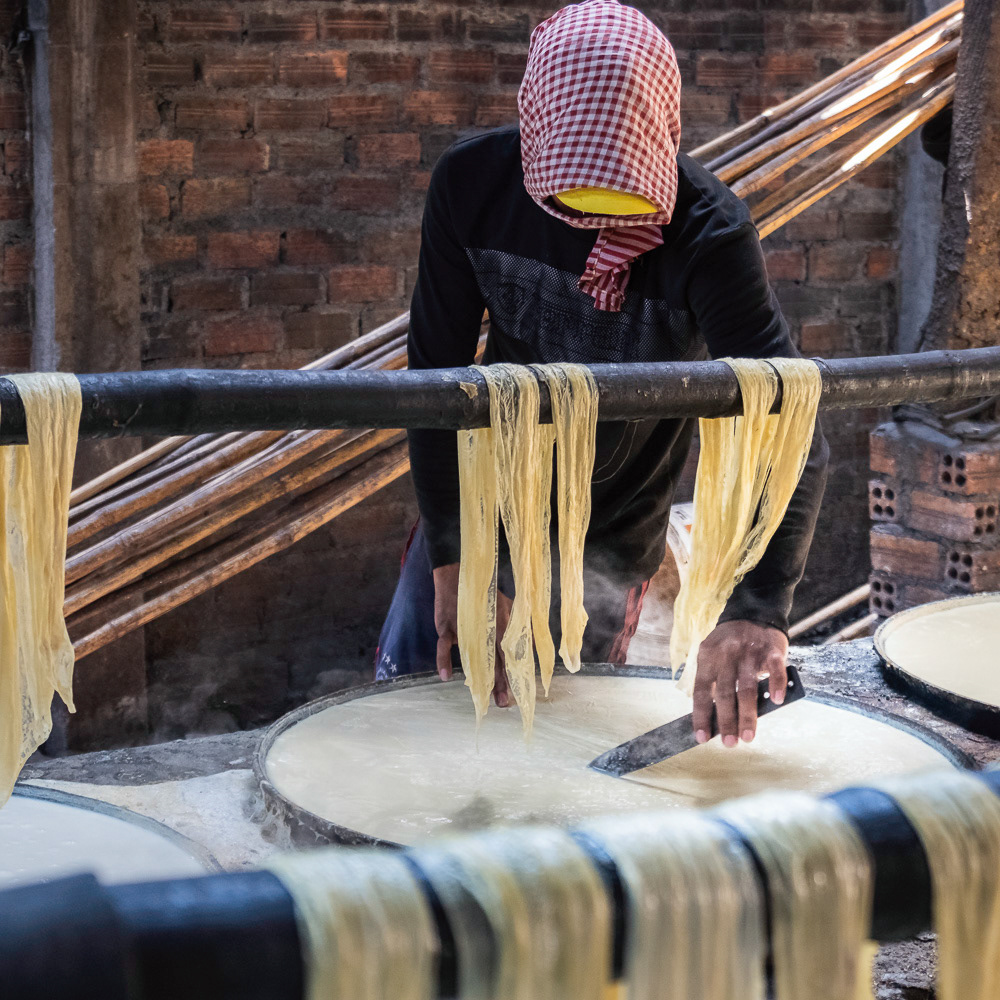
A worker systematically walks down the lines of vats and uses a knife to release the skin.
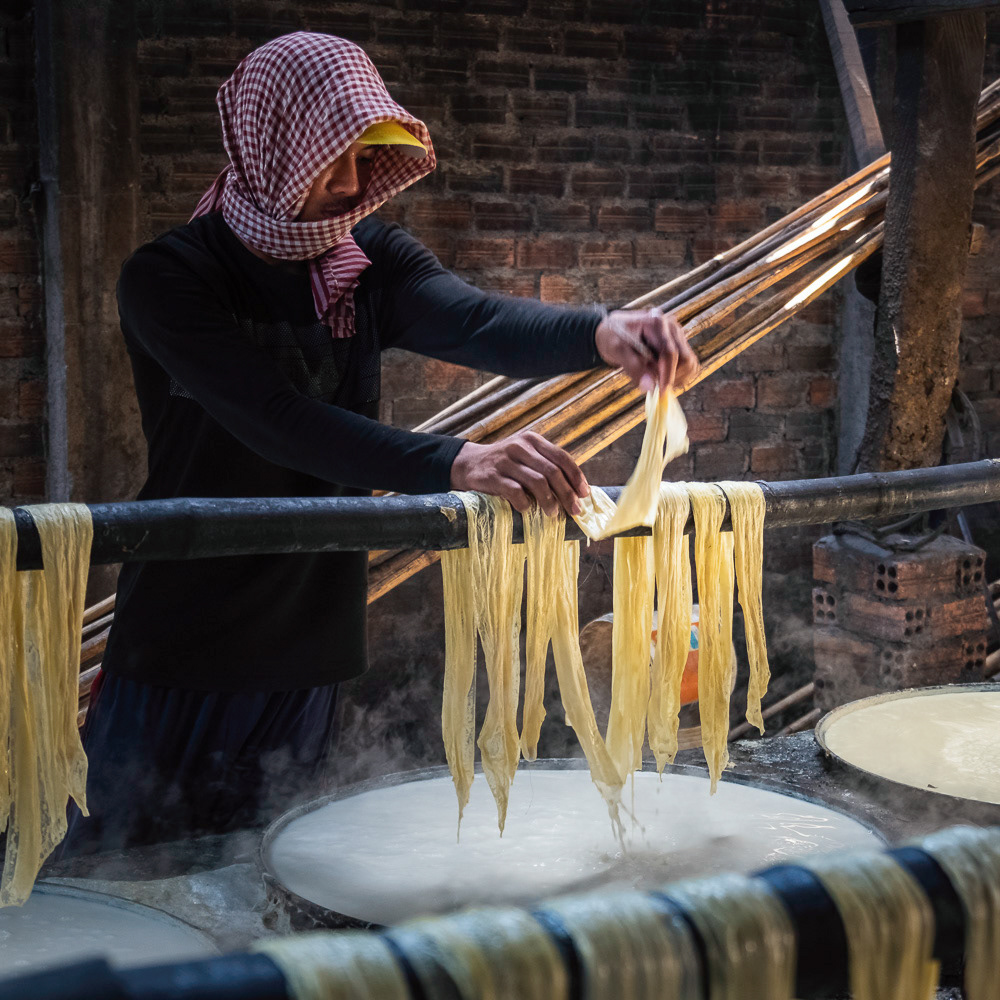
He drapes the skin on a pole over the vat to start drying the skin.
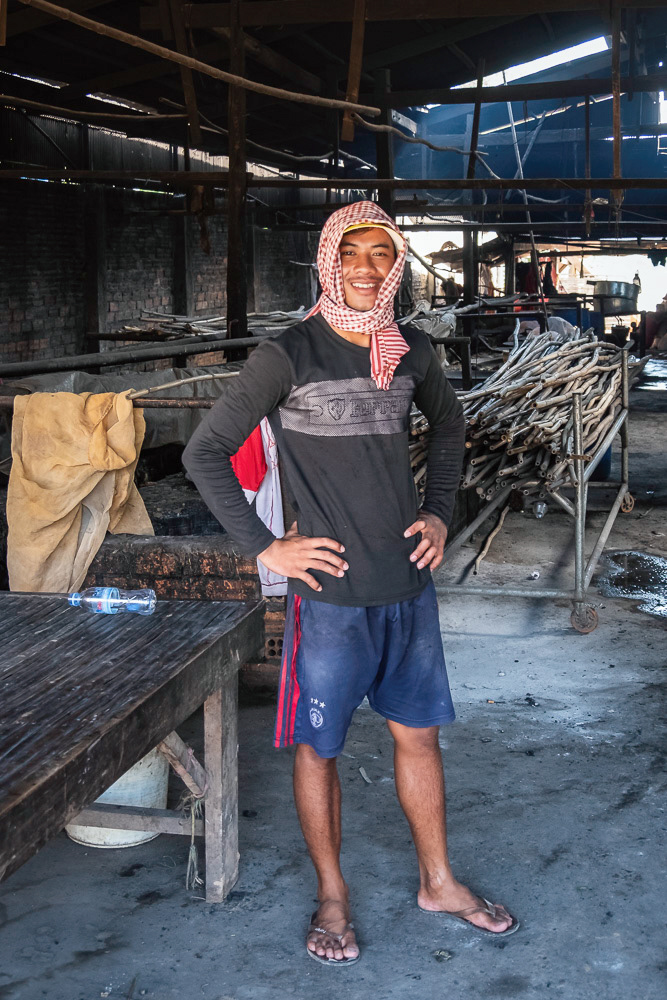
Before we left, I asked the worker to pose for a picture. He's wearing shorts and flip-flops even though he works near boiling vats of liquid and wood-burning fires!
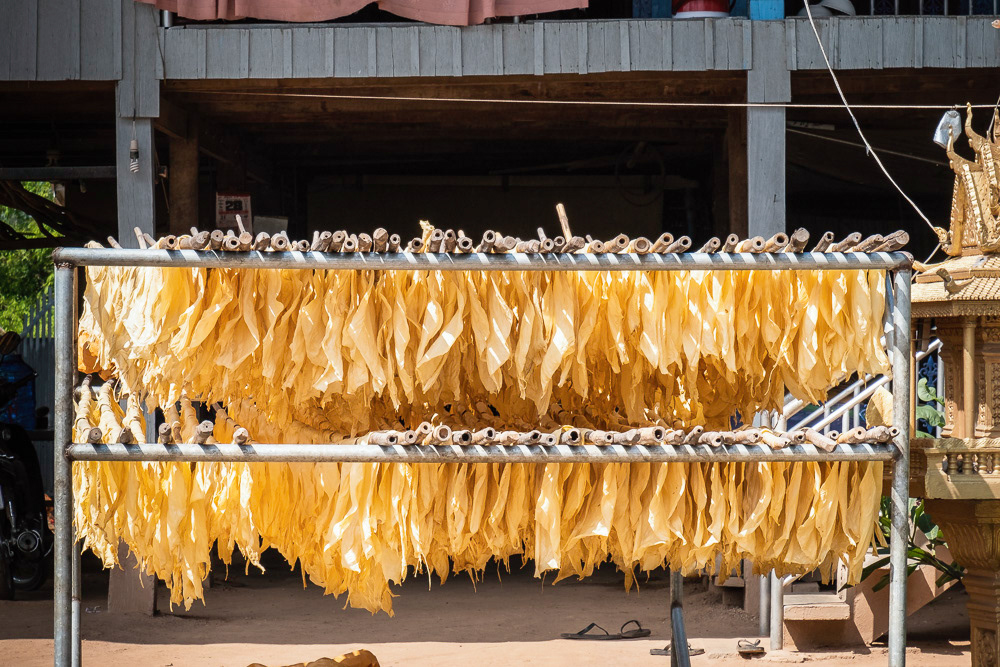
There is a large drying rack across the street where, I assume, the drying poles are moved after they're filled with beancurd skins.
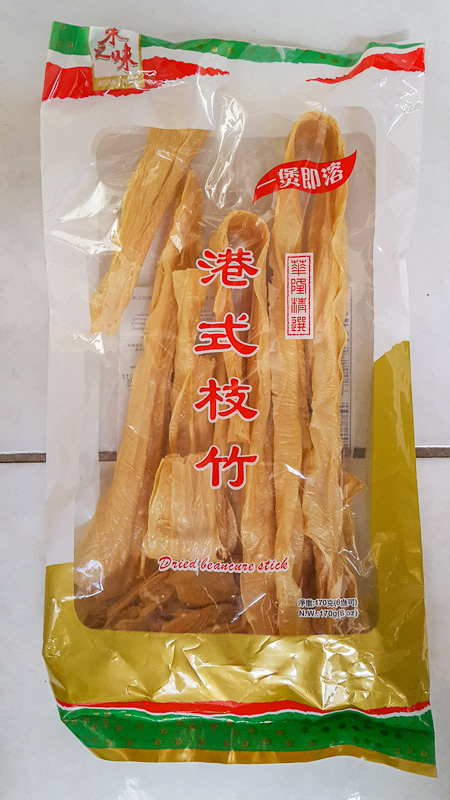
Beancurd skin is usually a main ingredient in the Asian dish, lo han jai, or Buddha's delight. In the United States, dried beancurd skin is available at most Asian grocery stores.